一、What problems might be encountered in the cleaning and processing of grains?
When grains are freshly harvested, they contain a lot of impurities, such as straw, bean stalks, broken stems and leaves, soil clods, pebbles, sand, grass seeds, weeds, etc. There are also shriveled, moldy, worm-eaten and broken beans, which vary in size and weight, making it difficult to sort them out completely in one go.
1、Raw material stage: Contaminants are mixed in, and the pre-treatment process is very demanding.
● The types of impurities are diverse.
During the fields, drying, and transportation processes, straw, leaves, dead branches, dust, sand, and soil clumps may be mixed in, along with insect-eaten grains, moldy grains,and weed seeds. Some weed seeds, fine sand, and grain particle sizes and densities are similar, forming "coexisting impurities", which are difficult to be completely separated by conventional equipment.
● Surface contamination with dirt
The surface of the grains exposed to the open air is covered with dirt and dust. The moisture-laden raw materials' dirt gets embedded in the gaps between the grains, making it impossible for dry sorting to completely clean them. Moreover, high-moisture raw materials may also exhibit the phenomenon of grains clustering and sticking together, which affects the uniformity of the feeding process.
2、Screening and wind selection process: Inconsistent grading, high loss rate
● Screen clogging and grading failure:
Dust, fragments, seed coat debris, and wet mud are highly prone to clogging the sieve holes. The higher the moisture content, the more severe the blockage of the net. Over time, the sieve screen may deform or become damaged, leading to material leakage and mixed sizes of grains, and making it impossible to achieve precise classification. The particle sizes of different grains vary greatly, and a single sieve screen is unable to accommodate the production of multiple types.
● Air volume adjustment is inconsistent, and the crushing rate exceeds the standard.
If the air volume is too small, it will be unable to remove light impurities,damage grains and floating dust; if the air volume is too large, it will carry away complete grains, resulting in loss of raw materials.
3、Surface cleaning, peeling: Appearance damaged, residue exceeds standard
● Skin injury
For grains with shells or skins such as rice, barley, oats, and beans, during the processes of hulling, polishing, and grinding, if the mechanical force is improperly controlled, it is prone to cause the grains to break, fall off the skin, crack the seeds, and change the color, thereby damaging the appearance and eating quality.
● The debris was not thoroughly cleaned up:
The remnants of rice awns, corn tassels, grain awns, and seed coat debris not only affect the cleanliness of the final product, but also hinder the subsequent coating and drug-mixing processes during seed processing, resulting in uneven adhesion of the drug film.
What cleaning machine do grains importers usually use?
To remove impurities such as stalks, shredded leaves, soil clumps, stones, importers generally adopt a multi-stage combined approach of "initial cleaning → stone removal → magnetic separation → specific gravity measurement → dust removal".The main machine includes the following categories:
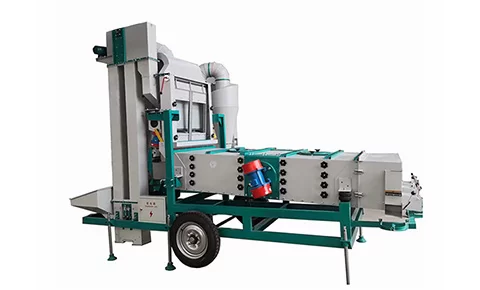
1、 Grains Air Screen Cleaner
Function: Can remove large particles (such as straw, leaves, etc.), small particles (such as weed seeds) and light impurities (such as dust, empty shells).
2、 Grains Gravity De-stoner
Function: It can remove small stones similar in size and weight to grains.
3、 Grains Gravity Separator
Function: Remove unripe grains, infested grains and moldy grains kernels.
4、 Grains Dust System
Function: It can remove light impurities and dust; prevent the workshop from being contaminated and prevent dust from adhering to the surface of grains.
5、 Grains Packaging Scale
Function: Automatic weighing (10–50 kg/bag), bag sewing / heat sealing.
How can the purity of grains be improved through the use of cleaning machine?
By combining multiple devices, parameter matching and process technology, dust, straw, grass seeds, stones, soil clumps in grains are removed layer by layer, transforming raw grains into high-purity refined grains.
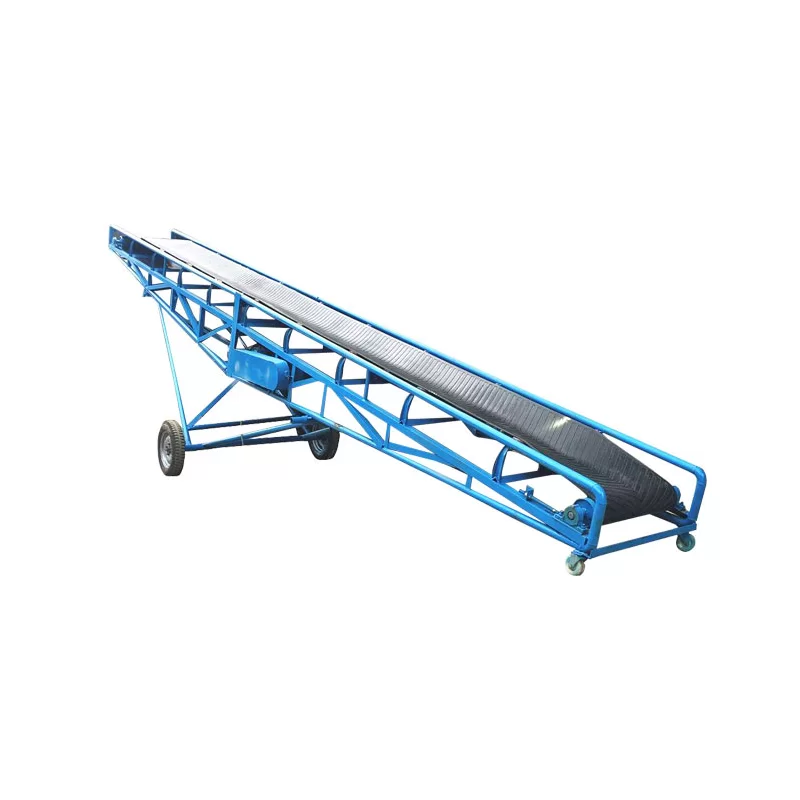
1、 Grains Pre-cleaner:Remove large impurities
The first pretreatment step involves screening out large straws, big clumps of soil, ropes and large debris to reduce the load on subsequent equipment, prevent machine blockages and lay a foundation for the subsequent thorough cleaning.
2、 Grains air screen cleaner:Remove large and small impurities, as well as light impurities.
The grains air screen cleaner removes light impurities, broken grass, dust, small impurities, shriveled grains through air separation and screening, initially improving the cleanliness.
3、 Grains Gravity de-stoner:Remove the grains Stones
The grains destoner is specifically designed to remove stones that are stuck together and cannot be removed by the air sieve. This significantly reduces the stone content and improves the purity for edible use.
4、 Grains Gravity Separator:Remove substandard and damaged grains.
Based on the differences in the fullness and density of the grains, they are classified. At the same time, the shriveled, infested and damaged grains are removed.
5、 Grains Magnetic Separator:Removing Clods of Soil from grains
The grains magnetic separator uses magnetic force to remove soil and soil clumps. It is mainly used to remove soil from grains.
6、 Grains grading machine
The grains grading machine sorts the grains by particle size, separating large particles, normal particles, small particles, and broken grains.
From raw grains to finished refined grains, various levels of impurities are removed step by step. The major impurities are cleared first, then light impurities are removed by air, heavy impurities are removed by sieving, irregular grains are sorted, and damaged grains are selected. The purity gradually increases.
二、What technical problems exist in the grains cleaning production line?

1、The problems caused by grains raw materials
Impurities are complex and difficult to separate: they contain long stalks, soil clumps, boulders, crushed bean skins, and moldy particles. A single sieve hole is unable to meet all requirements, resulting in small particles being lost, large particles being mixed in, and a decrease in sieve separation accuracy.
2、Selection equipment structure and process challenges
Both impurity removal and particle size classification are required. A single piece of equipment cannot handle both at the same time. When connected in series, there is a risk of transportation damage and seedling injury. The long stalks, weeds and hemp ropes in grains are prone to entangle the elevator, the sieve shaft, the sieve surface, resulting in poor material feeding, blockage of the sieve surface and interruption of the production line.
3、Production operation and commissioning challenges
The feed flow is unstable and the parameter adaptation relies on experience. Different types of grains from different origins, with varying levels of dryness and size, require re-adjustment of sieve holes, air volume, amplitude, and inclination angle.
4、The overall integration problem of the production line
After the initial cleaning, upgrading, wind screening, and stone removal processes are connected in sequence, the conveying speeds at the beginning and end are not coordinated, resulting in blockage, overflow, and accumulation of materials. The grains have a lot of dust during the sorting process, and the dust removal design of the ventilation duct is unreasonable, resulting in excessive dust in the workshop.
Regarding these issues, how should we design a grains cleaning solution?
In response to the problems of difficult separation of impurities and unstable purity in grains raw materials, we have designed a complete cleaning production line equipment. Through processes such as "pre-treatment → rough cleaning → fine cleaning → classification ", along with intelligent debugging and interlocking control, we achieve a closed-loop cleaning process throughout the entire process, and solve various pain points one by one.
Each process is designed specifically to address the corresponding technical issues.
(1) Grains pre-cleaner —Raw material pre-treatment

Function:
✅ Remove large impurities, such as straw, grass ropes, burlap sheets, large pieces of soil, bricks, large stones, metal blocks, etc.
✅ The grains pre-cleaner adopts a multi-layer sieve surface vibration classification structure. The upper layer with large holes is responsible for intercepting large impurities, while the middle and lower layers successively separate fine sand, debris and small impurities. This single machine can complete multiple levels of initial cleaning.
Advantages:
✅ The initial cleaning effect is excellent: It can not only remove large debris such as straw, plastic bags, and large soil clumps, but also simultaneously screen out fine sand, soil powder, and small seedlings of grass.
✅ By relying on the mechanical self-cleaning structure, the problem of sieve holes being blocked due to the presence of mud on the surface of grains and slight moisture is solved.
✅ The materials are evenly layered, protecting the subsequent equipment, with a low crushing rate and reducing the loss of raw materials.
(2) Grains air screen cleaner —Solve the problems of blocked nets, residual fine and coarse materials, and imbalance of air volume.
Capacity:5-10 Tons per hour
Purity: 99%

Function:
✅ By combining air selection with screening, large impurities, small impurities, light impurities and dust in the grains are removed.
Advantages:
✅ Multifunctional impurity removal:It integrates vibrating screening and air separation functions, allowing one piece of equipment to simultaneously complete the separation of various impurities.
✅ Low material damage rate: Adopting flexible vibration and gentle material conveying design, the material flows smoothly without strong compression or violent collisions.
✅ High versatility, multiple functions in one machine:After replacing the screen mesh and adjusting the air volume parameters, it can be compatible for the separation of crops such as grains and beans, suitable for importers of various types of agricultural products, and the equipment utilization rate is high.
(3) Grains destoner —Remove the stones from the grains.
Capacity:5-10 Tons per hour
Purity: 99%

Function:
✅ By adjusting the vibration frequency and air volume, the stones in the grains can be removed.
Advantages:
✅ Food-grade stainless steel material:Stainless steel woven countertop, which can directly come into contact with food.
✅ High quality motor:for grains cleaning machine, high quality Japan bearing.
✅ Highly adjustable: accommodating diverse material types and specifications.
(4) Grains Gravity Separator —Remove the damage grains from the grains.
Capacity:5-10 Tons per hour
Purity: 99%

Function:
✅ The gravity separator can effectively remove diseased grains, damaged grains, rotten grains, deteriorated grains, moldy grains and ineffective grains from grains.
Advantages:
✅ Precisely sorted according to the proportion:By using differences in density and bulk density for separation, it is easy to distinguish: full and good grains, shriveled grains, insect-infested grains, and moldy grains..
✅ Adopting a design with anti-clogging screens: for grains cleaning machine, high quality Japan bearing.
✅ Highly adjustable: One machine can be used for various types of grains.
(5) Grains Magnetic separator —Remove the clods from the grains.
Capacity:5-10 Tons per hour
Purity: 99%

Function:
✅ The gravity separator can remove all metals or clods and soils from grains.
Advantages:
✅ Stainless steel surface : Used for food processing
✅ Low speed no broken bucket elevator: Transports grains to the magnetic separator without any damage occurring during the process.
✅ Advanced frequency converter: Can adjust the vibration frequency according to different materials to achieve the best results.
(6) Grains Auto packing machine — Automatically complete grains quantitative measurement and packaging.

Function:
✅ The grains auto packing machine used for packing the grains, From 10kg-50kg per bag, electronic controlled automatic.At the end of the grains production line, automatic feeding, weighing, discharging and bagging are carried out in a continuous process, replacing manual filling and weight estimation, significantly improving the packaging efficiency.
Advantages:
✅ Precise measurement and weighing: Accurate weighing, small quantitative error, and unified measurement standards.
✅ Save manpower: Reduce the need for multiple people to weigh, carry bags, and prepare ingredients, thereby lowering labor costs.
✅ The operation is simple:One-click setting of weight, automatic adjustment of speed and capacity. Easy to switch specifications. Compatible with various packaging types of beans.

三、The advantages of the grains processing plant?
1、The process is seamless, and impurity removal is comprehensive and thorough.
First, the grains processing plant includes the pre-cleaner, Air screen cleaner, De-stoner,Gravity separator,magnetic separator and Auto packaging machine.The entire production line employs a closed-loop process comprising initial cleaning, air-screen separation, destoning, gravity separation, and automated packaging. This sequence systematically removes coarse impurities, dust, grit, stones, shriveled grains, moldy kernels, and off-color contaminants; through this multi-stage, progressive purification, the finished product achieves a high level of purity.
2、High degree of automation, saving manpower
Our entire grains production line is highly automated. The entire process features continuous mechanical transportation, automatic sorting, and quantitative packaging, eliminating the need for manual screening, handling, and weighing. This reduces reliance on human labor and significantly increases processing efficiency.
3、All the components of the entire machine are made from the world's top brands.
The grains processing plant core electrical, transmission, sealing, and sensing components are sourced exclusively from leading international top-tier brands, ensuring that all critical parts feature high-standard configurations. By addressing potential issues—such as wear and tear, aging, electrical faults, and mechanical jamming—at the source, the equipment achieves exceptional operational stability. This results in a significantly reduced failure rate, minimizes downtime for maintenance, and guarantees the long-term, continuous, and efficient operation of the grains processing line.
Mar. 12, 2026
Nigeria is the world's seventh-largest sesame producer and a major exporter. Sesame is a core economic crop in the country's northern and central regions, renowned for its high oil content and high-quality white seeds, with approximately 80% of its production exported.
Mar. 12, 2026
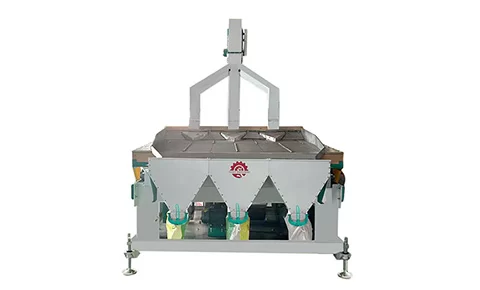
Both destoners (gravity destoners) and gravity separators (gravity sorters) utilize the difference in specific gravity and suspension velocity to clean impurities from sesame seeds.
Mar. 12, 2026
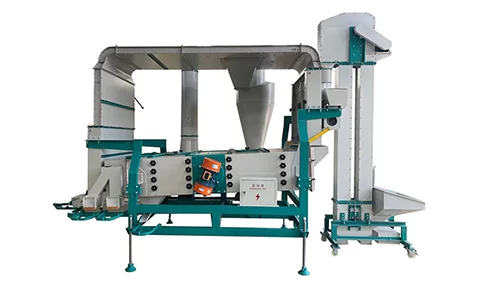
How Does An Air-Screen Cleaning Machine Remove Impurities From Soybeans And Mung Beans?
Freshly harvested soybeans and mung beans are considered raw grains with a wide variety of impurities.